

Photoreceptors and their function in the eye
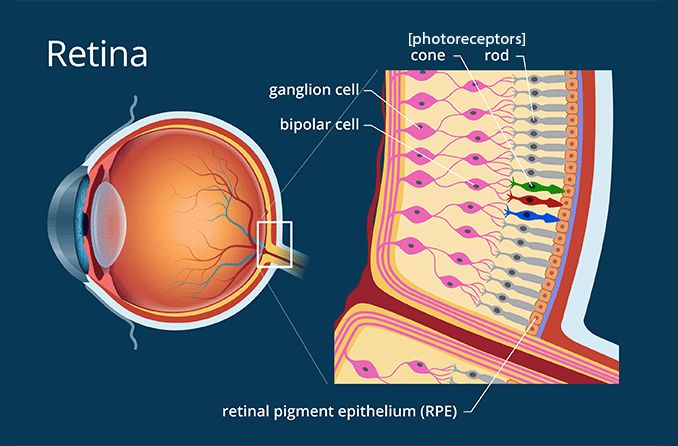
Small cells called photoreceptors in the eye play a vital role in night vision and also affect how the eye sees color. Photoreceptor cells are located in the retina, which is the light-sensitive tissue that lines the back of the eye.
There are two kinds of photoreceptor cells: cones and rods. Each type of photoreceptor works to convert different levels of light into signals that are then sent to the brain to form a visual representation.
Photoreceptor function and types
There are two types of photoreceptors: cone photoreceptors and rod photoreceptors.
These cells function by sensing light and/or color and delivering the message back to the brain through the optic nerve. While cone photoreceptors detect color through bright light, rod photoreceptors are sensitive to low-light levels. Rods aid in night vision and identifying black and white hues.
Both cones and rods contain special proteins that assist in their functionality. The human eye contains more rod photoreceptors than cone photoreceptors.